

History

Downtown Jamaica—or as we like to call it, “DJQ”—is one of the oldest settlements in the five boroughs. Like the Munsee word we’re named after, “yameco,” our community’s history can be traced back centuries.

Our Roots
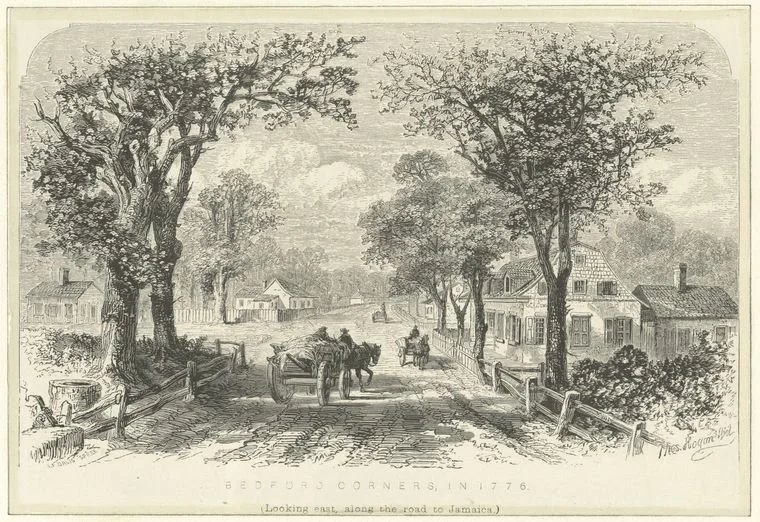
Jamaica Avenue was a trail Indigenous tribes trekked from as far away as the Ohio River and the Great Lakes, coming to trade skins and furs for wampum. In 1655, Dutch colonists paid Indigenous inhabitants for the land. Dutch Governor Peter Stuyvesant dubbed the area “Rustdorp.” The English began controlling the land in 1664 and renamed it “Jamaica,” a transliteration of “jameco,” the Munsee word for “beaver.”
By 1776, Jamaica had become a trading post for farmers and their produce. For over a century, horse-drawn carts plodded along Jamaica Avenue, then called King’s Highway. Rufus King, a signer of the Constitution and advocate for the abolition of slavery, came to live here in 1805. He added to a modest 18th century farmhouse to create a stately Federalist-style home, now the King Manor Museum. The Village of Jamaica was incorporated in 1814, and by 1834 the Brooklyn and Jamaica Railroad Company had a line into Jamaica. In 1850, Jamaica Avenue, then Fulton Street, was a plank road with a toll gate; in 1866 the tracks were laid for a horse car line. Twenty years later those tracks were the first in the state to be electrified.
In 1840, the Jamaica Convention was held on what’s now the campus of York College, just a stone’s throw from DJQ proper. The first of its kind in the State of New York, the Jamaica Convention would become an annual meeting of Black civil rights activists across the state.
Our Development

In the years following the Civil War, Jamaica grew rapidly. In 1875, the population of Jamaica stood at 780 people. Five years later, it grew to include 3,922. By 1898, the year Queens was incorporated into New York City, 6,500 people lived in Jamaica. By 1910, that number topped 58,000. Business and residential development accelerated in the 20th century, with the 1918 extension of the elevated transit lines (with a nickel fare!), which enabled people who worked in Manhattan to live in Jamaica. The Long Island Rail Road Station was completed in 1913. By the 1940’s, Jamaica’s commercial district included fine department stores, the first modern supermarket, and a movie palace. The 1937 opening of the IND Subway under Hillside Avenue linked Jamaica with Manhattan and Brooklyn.
Resident Elizabeth Cisco also helped bring about the end of school segregation in New York State, through filing a lawsuit. Albany passed a resolution and declared that “to no one person, living or dead, is the State of New York under greater obligations for the complete obliteration of racial discrimination than to this splendid representative [Elizabeth Cisco].”
Our Community
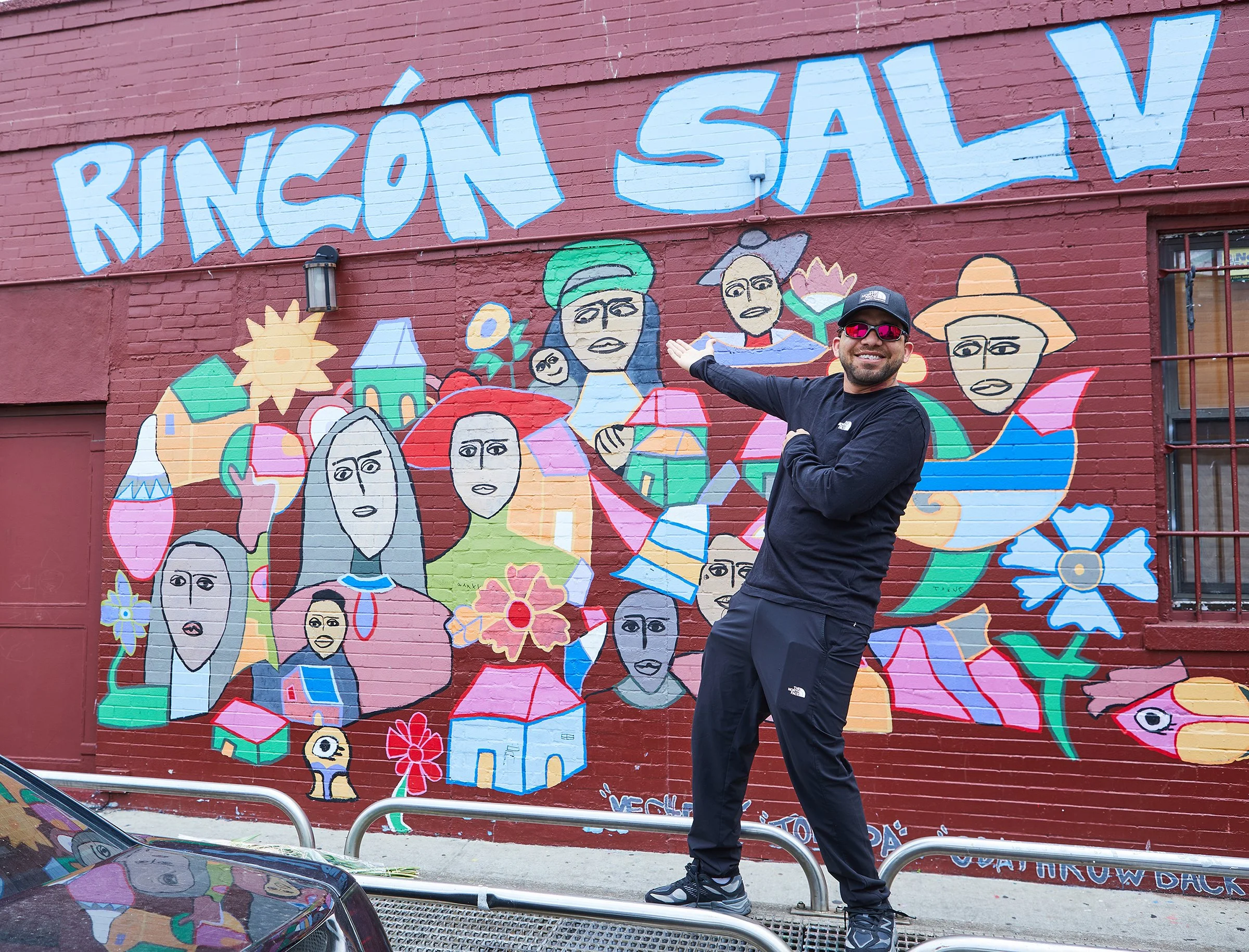
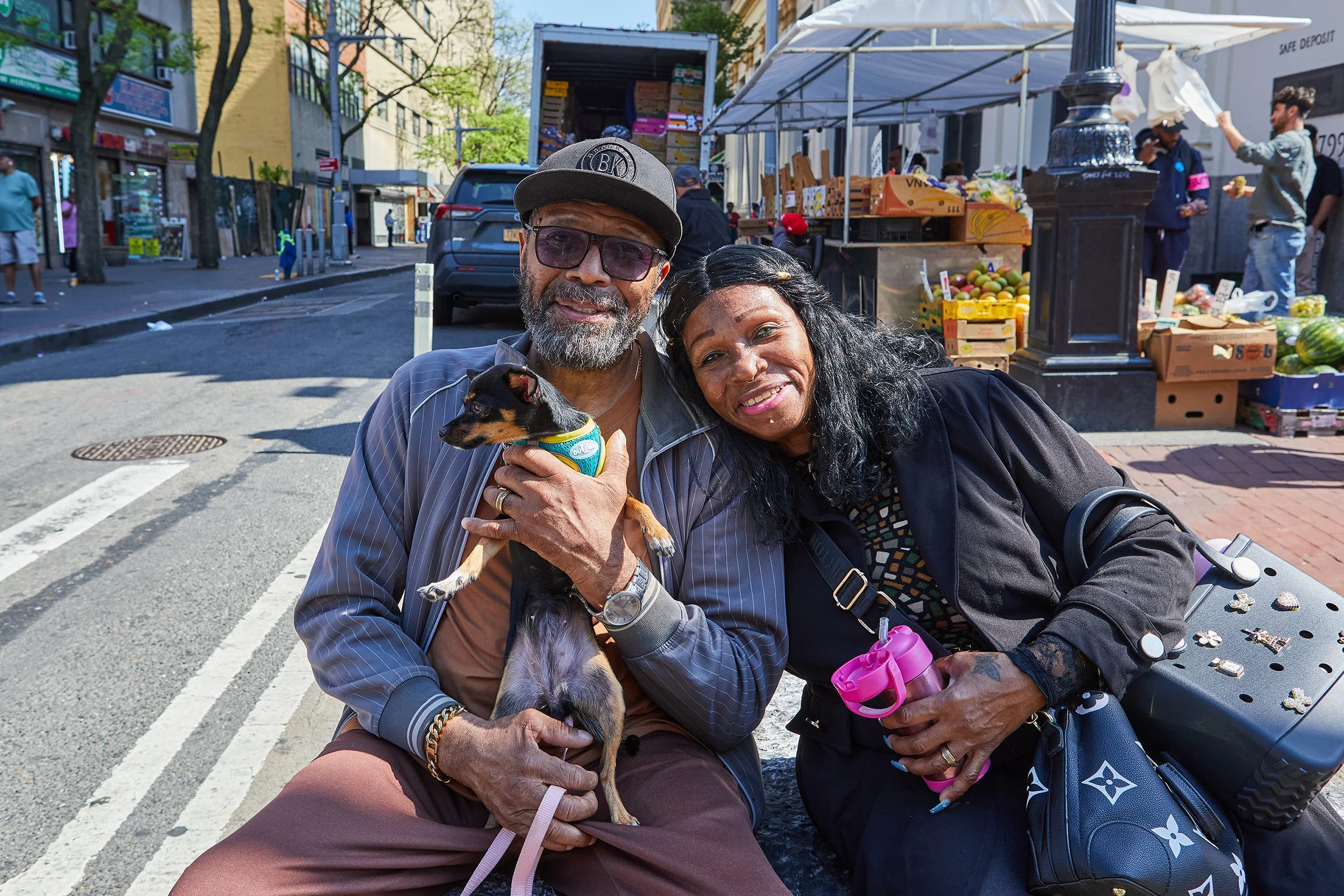
Today, DJQ is one of the most vibrant and diverse communities in the United States, at the heart of the “World’s Borough,” Queens. The scent of authentic cuisines from around the world wafts through our streets, and a chorus of different languages can be heard throughout the district—a testament to our bustling commercial corridor’s reputation as a lively place to shop, eat, live, and work.
Notable Sights
NYC’s art and architectural history is alive in DJQ. Walk down memory lane on our self-guided art and architecture tour.
-
![A large, old, two-story house painted cream with black shutters, surrounded by greenery, enclosed by a black metal fence, with a lush lawn in the foreground and tall trees around.]()
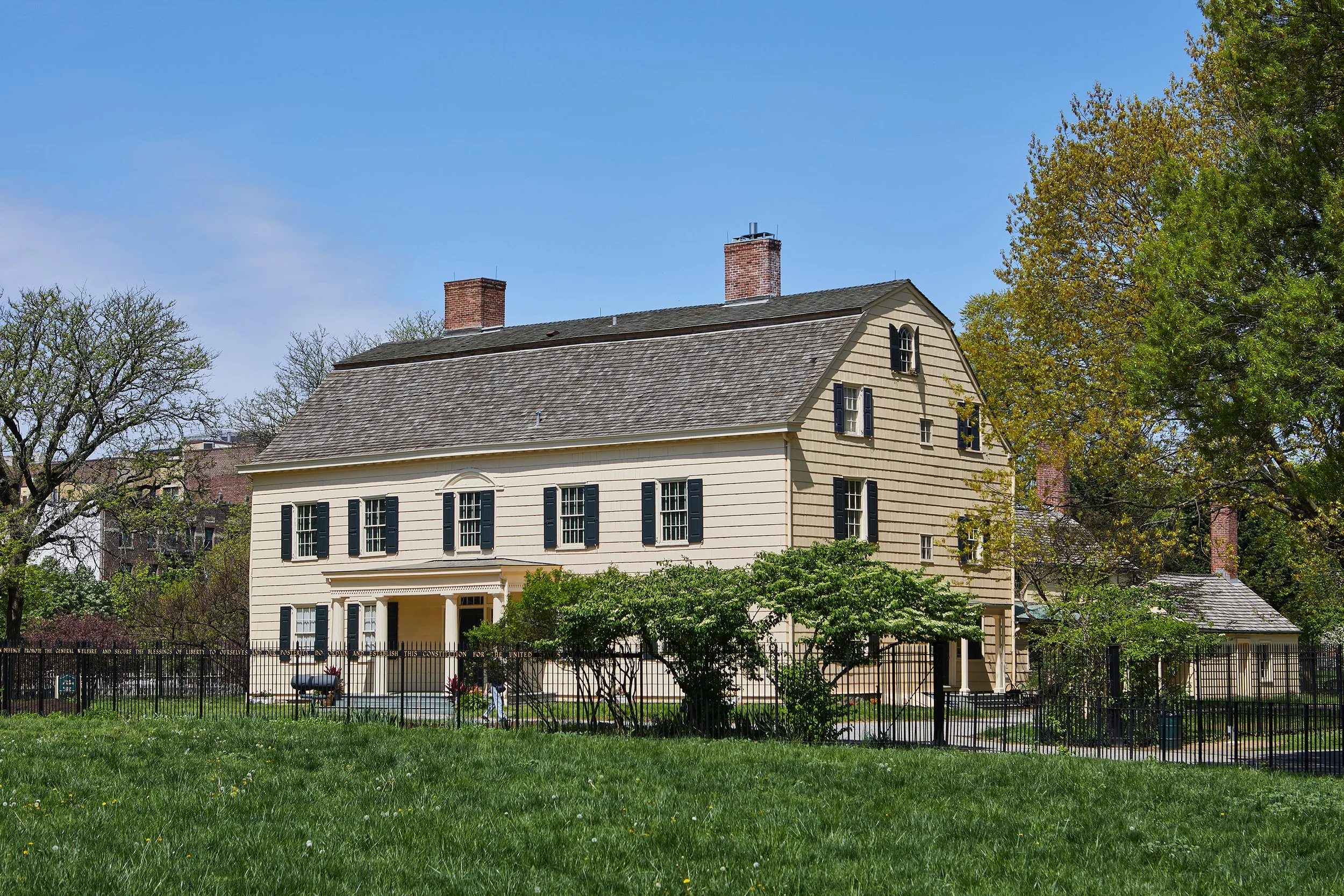
King Manor Museum
150-03 Jamaica Ave
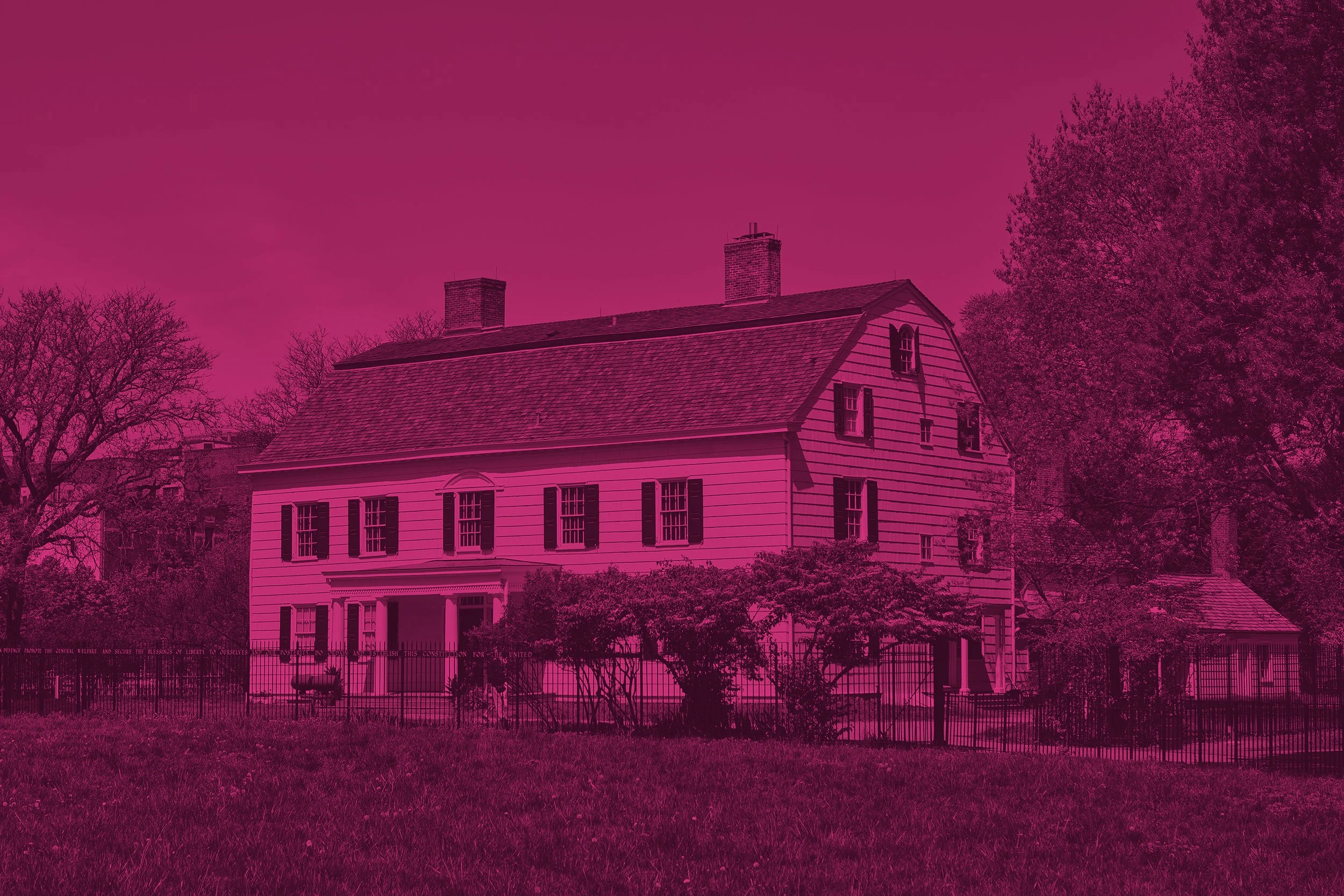
The Federalist-style King Manor was the home of Rufus King—a signer of the U.S. Constitution, U.S. Senator, and outspoken opponent of slavery. Today, it is a museum dedicated to representing an inclusive history of abolitionist activism in our neighborhood.
-
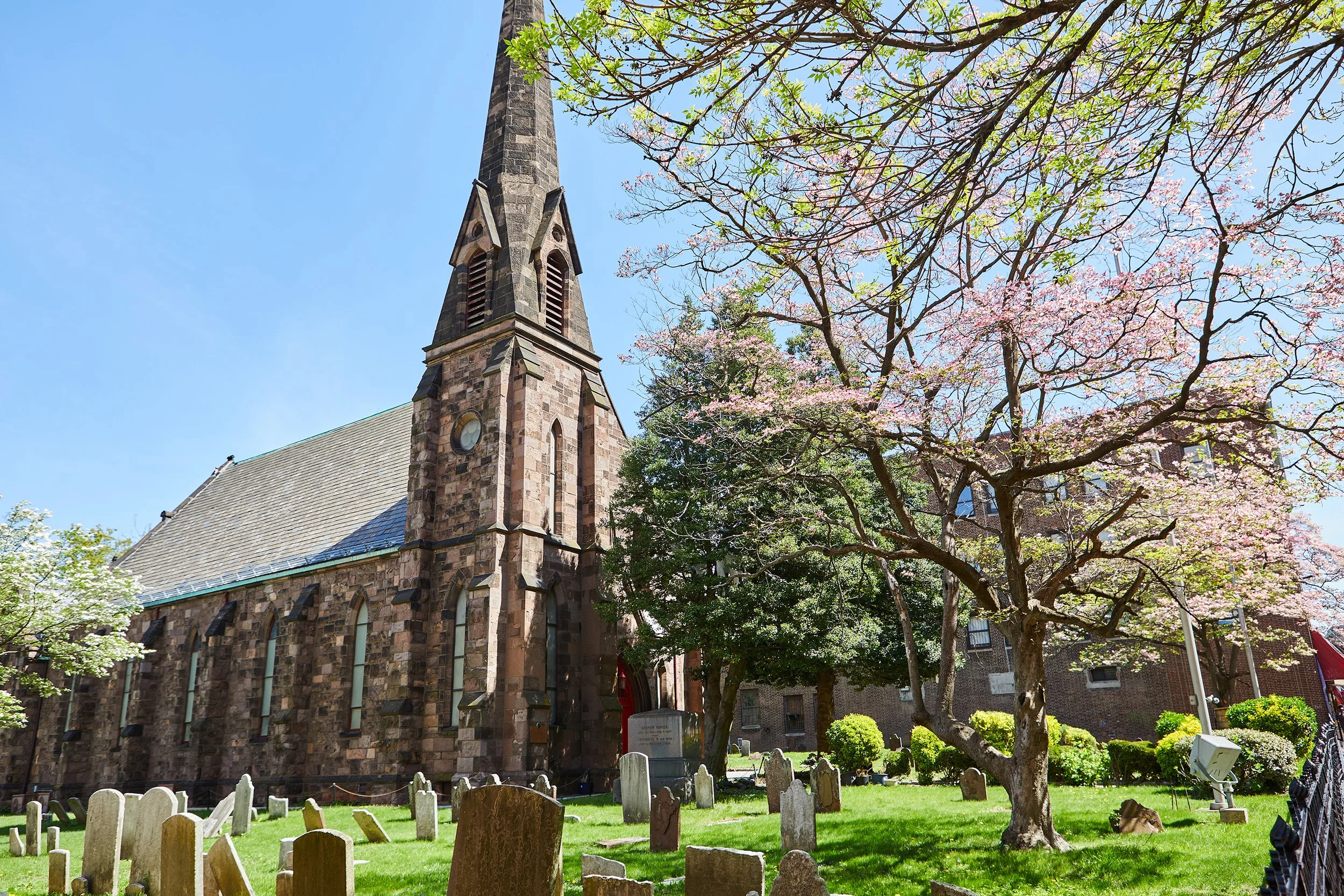
![A stone church with a tall steeple surrounded by trees and a graveyard with headstones on a sunny day.]()
Grace Episcopal Church
155-15 Jamaica Ave
Grace Episcopal Church is an outstanding example of English Gothic Revival architecture. The Church contains several WPA murals painted during the Great Depression.
-
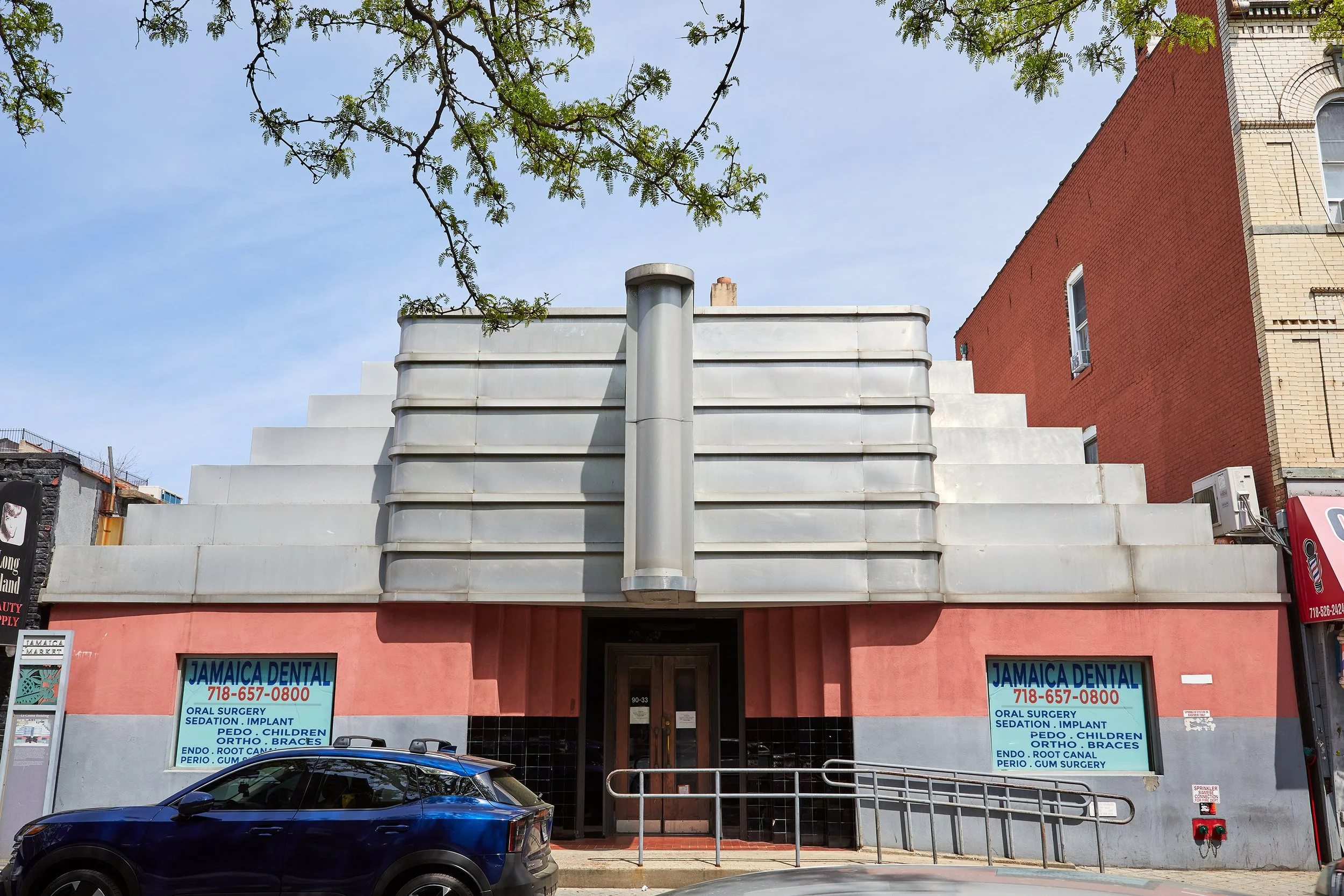
![A building with a modern design, featuring a unique white, tiered facade with a vertical metallic exhaust pipe in the center. The lower part of the building is painted reddish-pink, with signs advertising Jamaica Dental and their services. There is a black car parked in front and a sidewalk with a metal wheelchair ramp.]()
La Casina
90-33 160th St
Built in 1934, the former La Casina is a rare Queens example of the streamlined Moderne Style. Its ziggurat façade and projecting neon sign called attention to its use as a night club and restaurant. It was restored in 1993.
-
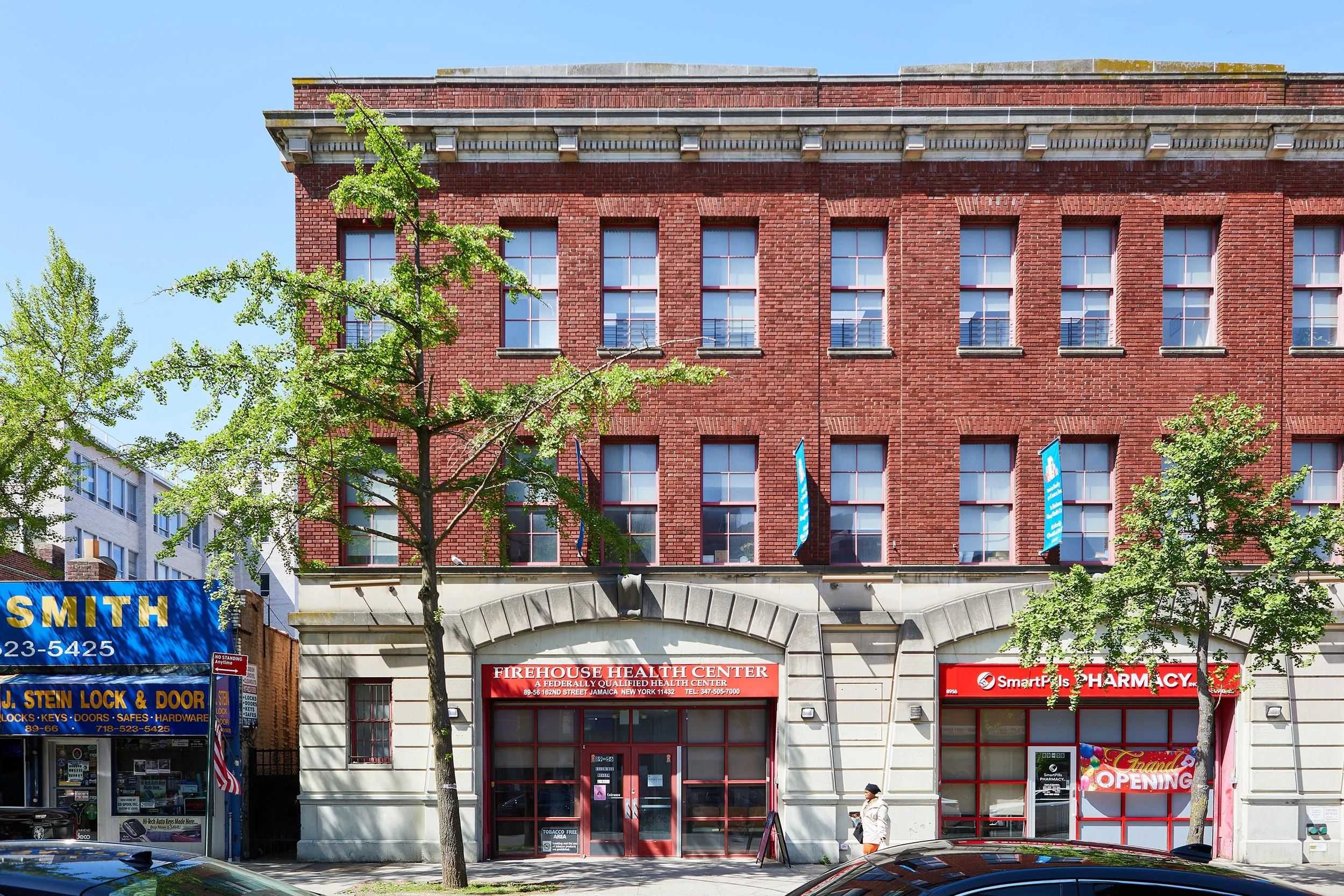
![Red brick building with a health center on the ground floor, displaying signs for Firehouse Health Center and a pharmacy, with trees and parked cars in front.]()
The Firehouse
89-56 162nd St
The Jamaica Firehouse, completed in 1925, is a fine example of Classical Revival architecture. Its three bays once accommodated one hook and ladder and three engine companies.
-
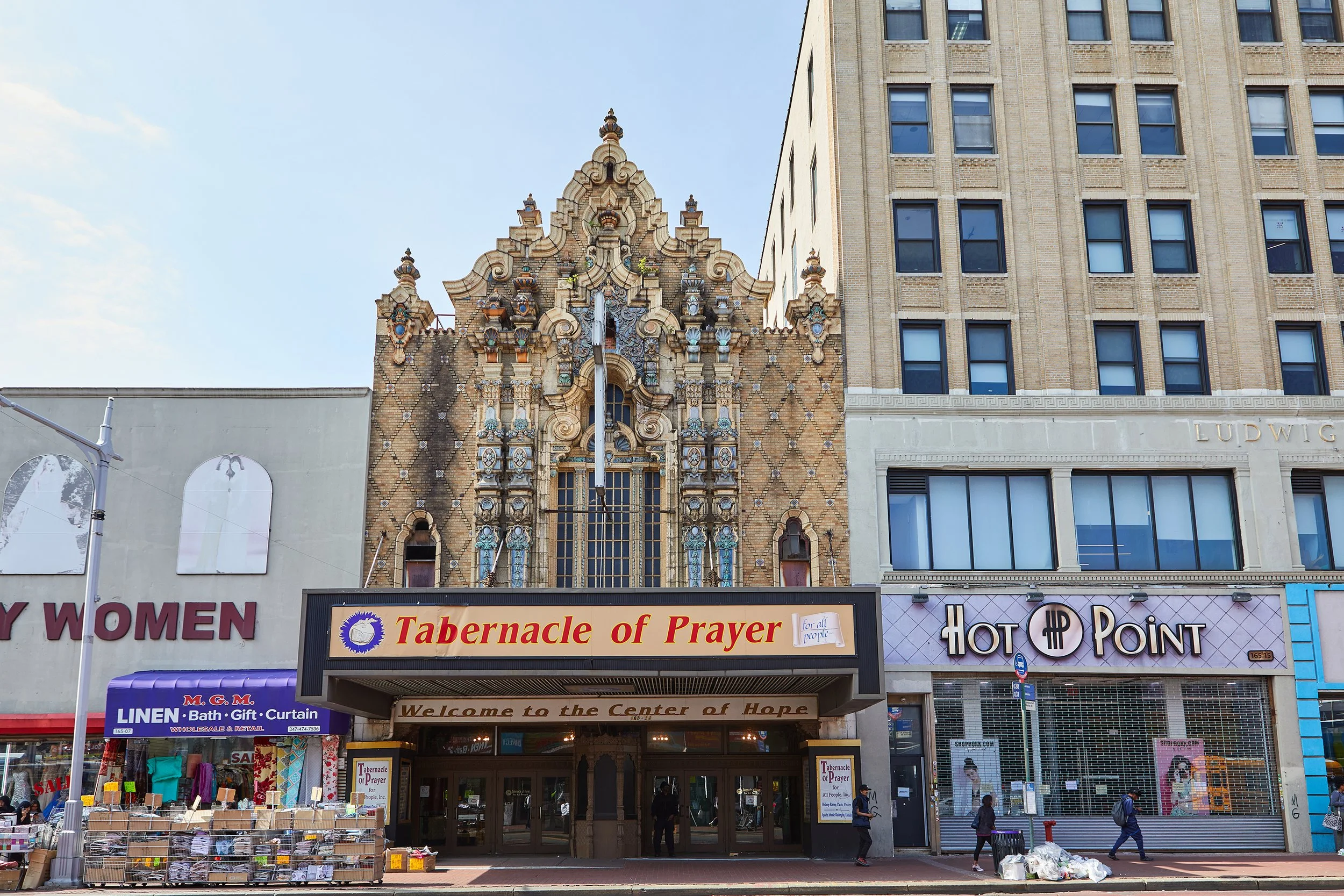
![Facade of a historic church architectural structure with ornate detailing, surrounded by commercial buildings, with signs reading 'Tabernacle of Prayer,' 'Hot Point,' and other retail stores at street level.]()
Valencia Theatre
165-11 Jamaica Ave
Designed by John Eberson and constructed in 1929, the Valencia was one of several “Wonder Theatres” built in the US. The interior—with its star-lit ceiling, pools, niches, and exotic decoration—creates the impression of a Spanish plaza.
-
![Exterior view of a multi-story building with a clock made of black and white tiles on its facade.]()
Former Kurtz Store
162-24 Jamaica Ave
This former furniture store is a fine example of Art Deco style. The building’s smooth, streamlined appearance suggests a futuristic vision of the 20th century.
-
![Street scene with people walking past a building housing a Chase bank branch; a large clock showing 1:11; street signs, storefronts, a vendor stand, and city buildings in the background.]()
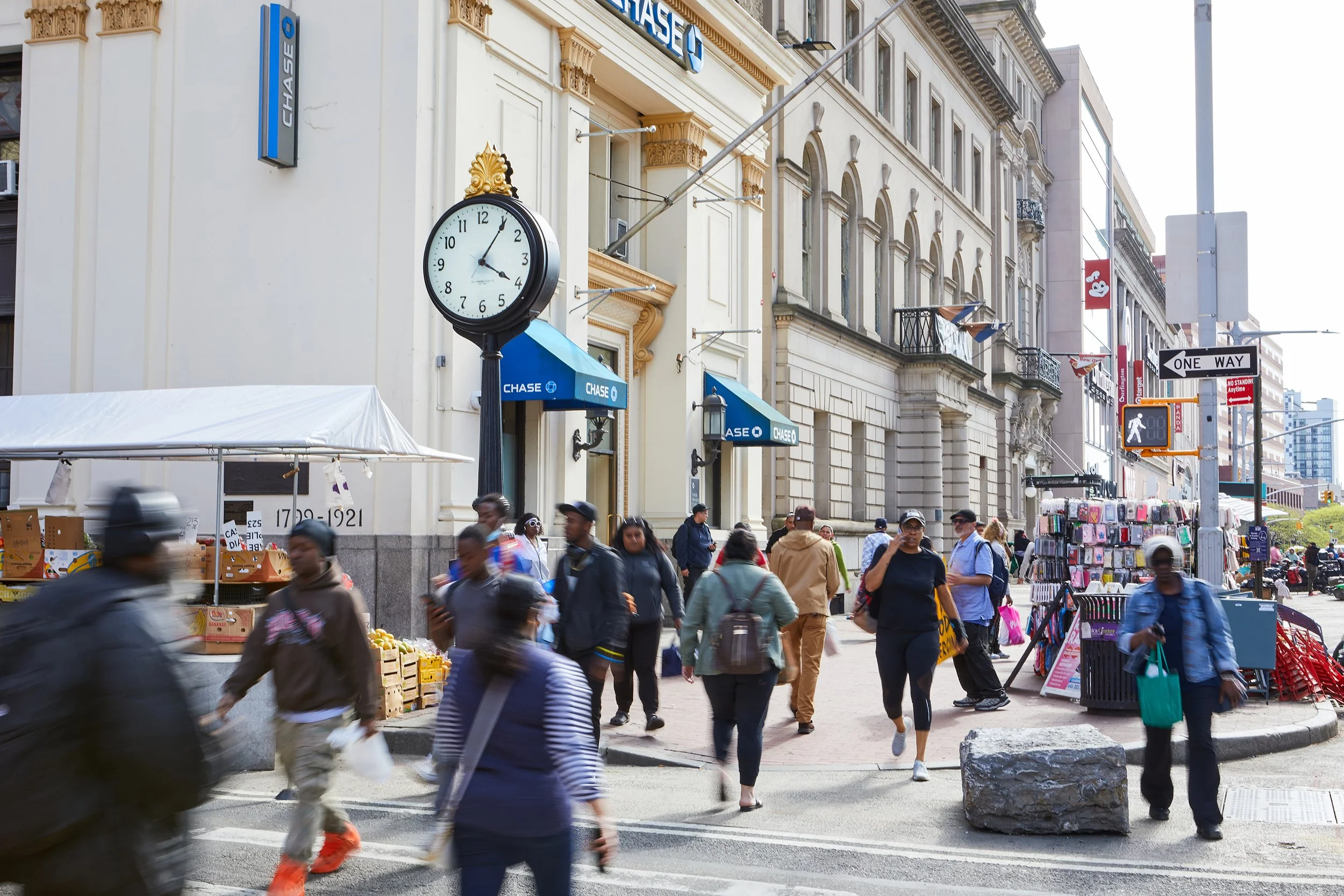
Sidewalk Clock
Union Hall St.
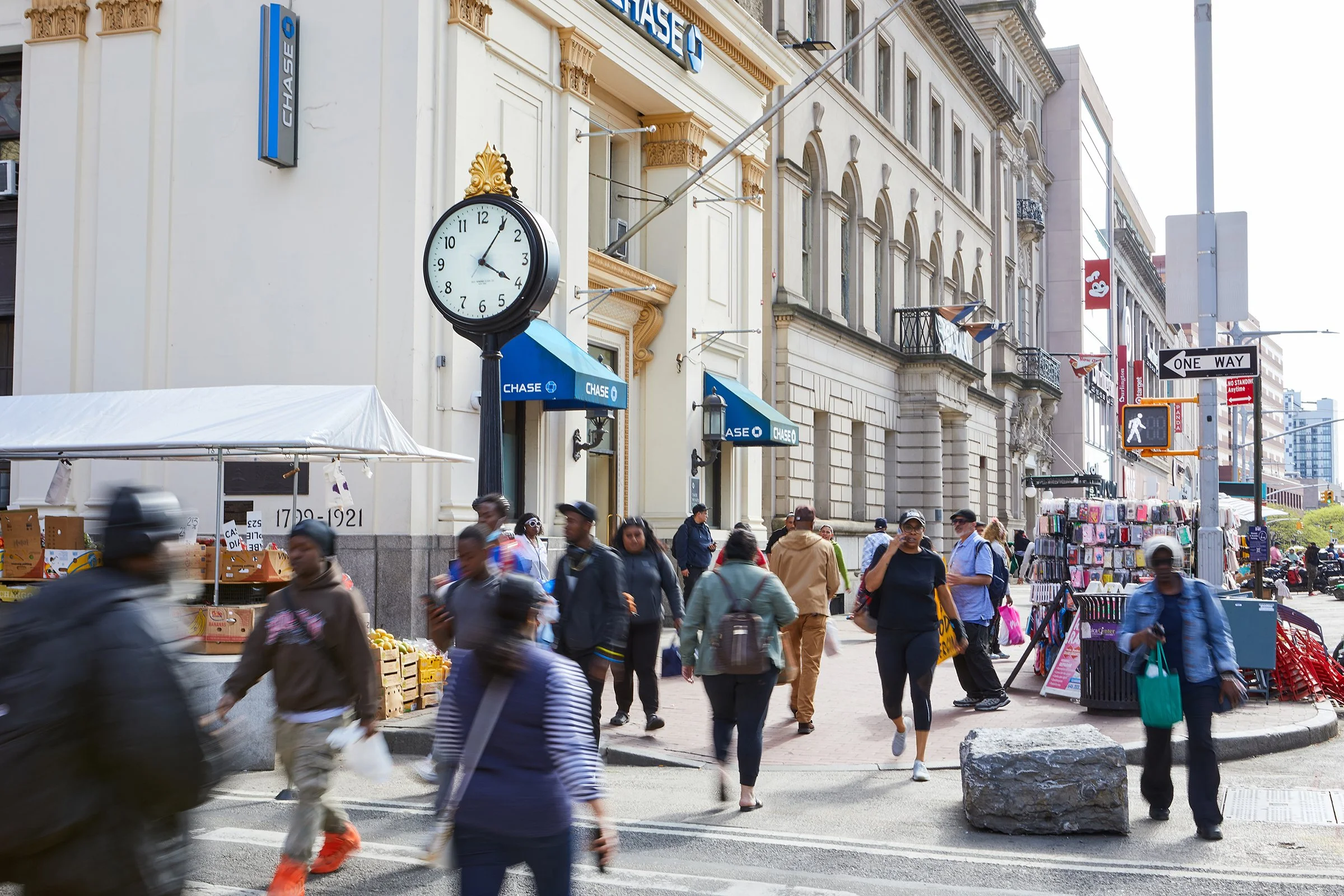
Originally erected in 1900 on Jamaica Avenue, this clock was designated a New York City landmark in 1981. The double-faced clock, with cast-iron base and fluted post, was restored and moved to its current location in 1989.
-
![Street scene featuring a Chase bank branch in a historic building, with pedestrians, parked cars, street vendors, and planters on a sunny day.]()
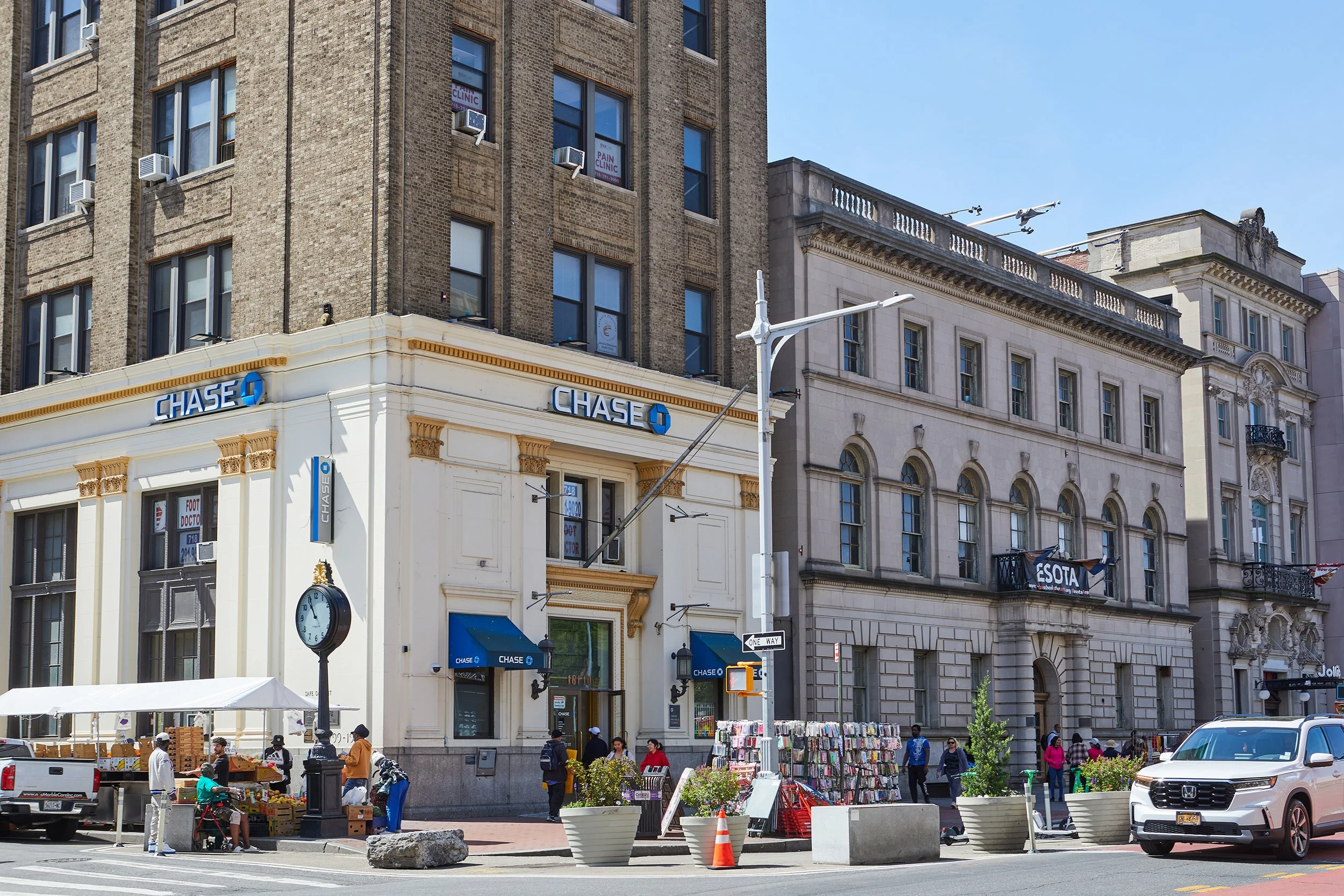
Former Register Building
161-04 Jamaica Ave
Built in 1898, the Register served for 76 years as the County Registry for title deeds in Queens. Its Neo-Italian Renaissance façade earned the building New York City landmark status.
-
![City street scene with historic and modern buildings, pedestrians, and traffic lights.]()
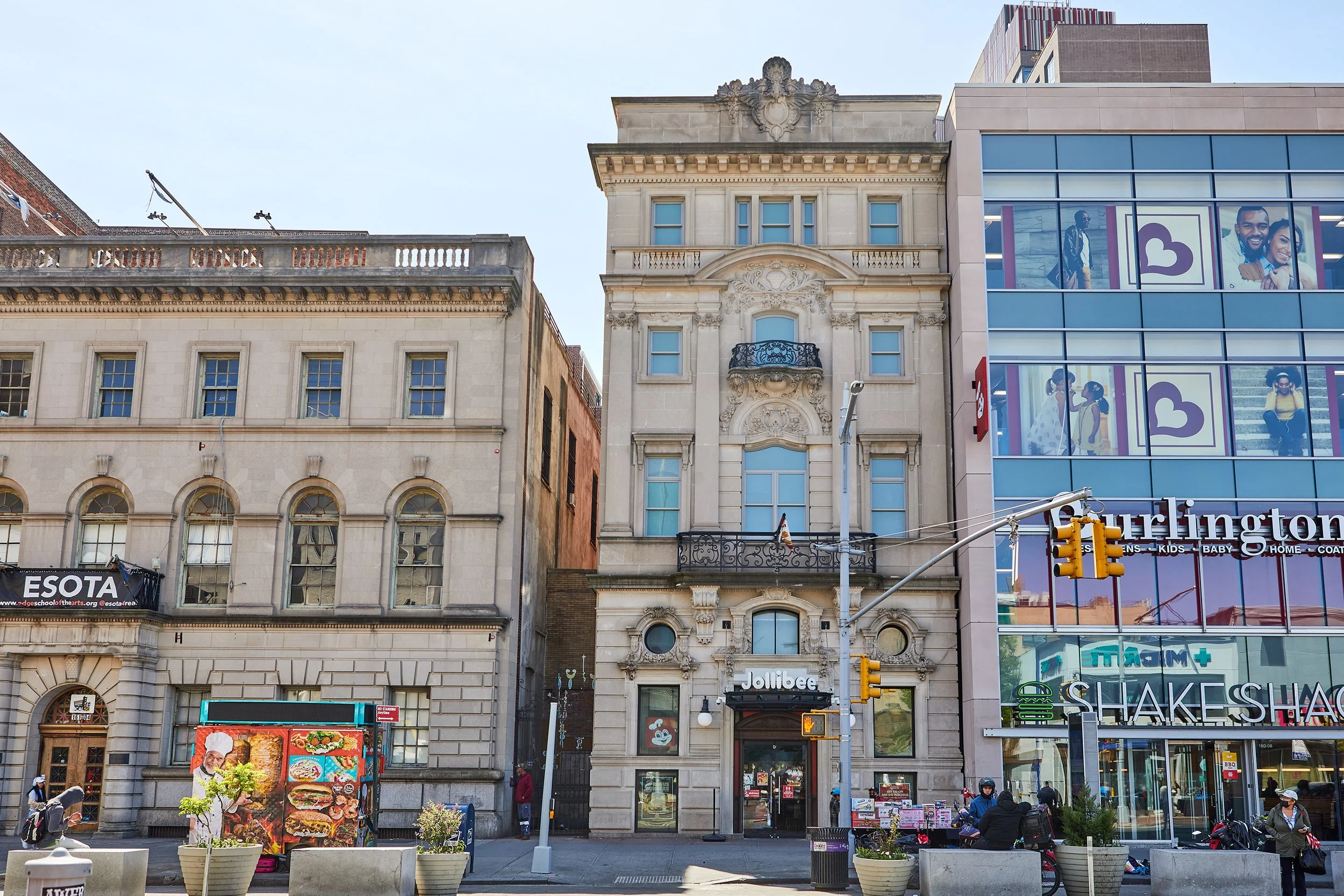
Former Jamaica Savings Bank
161-02 Jamaica Ave
Built in 1898, this landmarked structure is the finest Beaux Arts building in Queens. The sensual decoration and delicate iron work are a pleasant contrast to the stern but elegant Register Building next door.
-
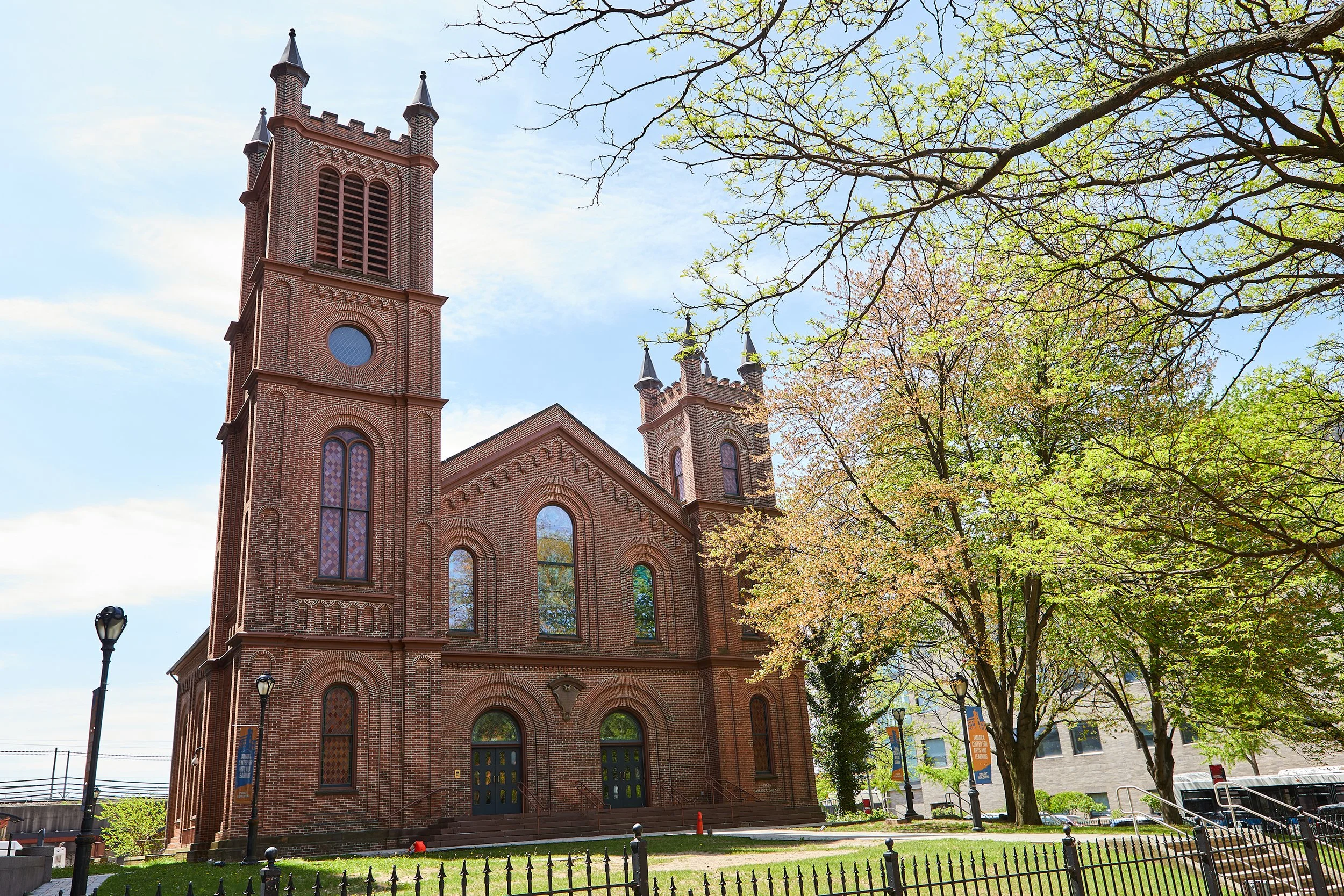
![A red brick church with two prominent towers and tall arched windows, surrounded by green trees and a black fence, under a partly cloudy sky.]()
First Reformed Church
153-16 Jamaica Ave
Built in 1859, the landmarked church was designed and constructed by Jamaica master carpenter Sidney J. Young, with assistance from master mason Anders Peterson. It is among the finest examples of Early Romanesque Revival Style, and was recently restored by the City.
-
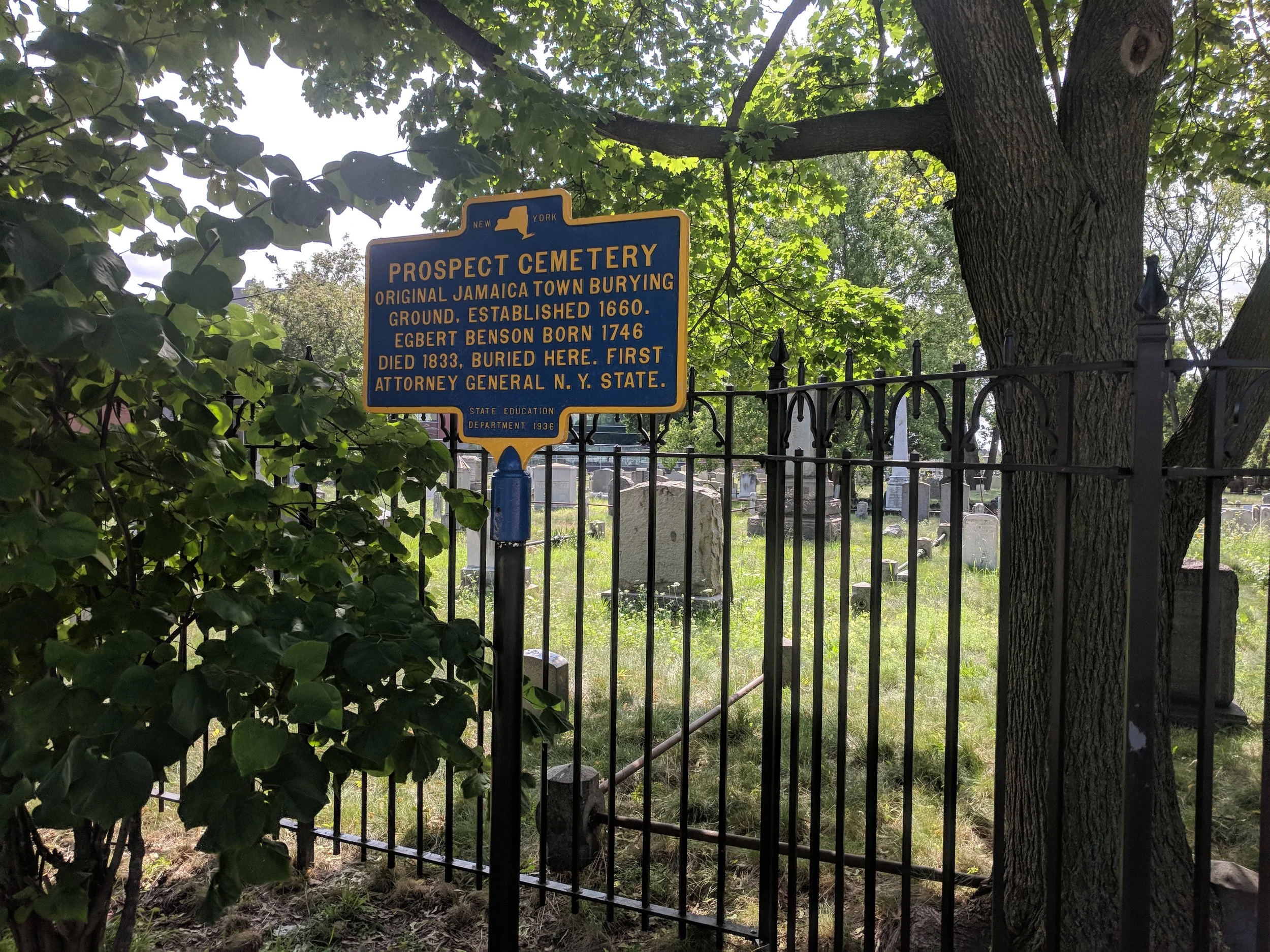
![Historical cemetery behind a black metal fence with a blue and yellow historical marker about Prospect Cemetery, established in 1660, with gravestones and green trees in the background.]()
Prospect Cemetery
Beaver Rd/159th St
Established in 1668, Prospect Cemetery is the oldest cemetery in Queens County. The Chapel was recently renovated and dedicated to Illinois Jacquet, a world-famous jazz musician.
-
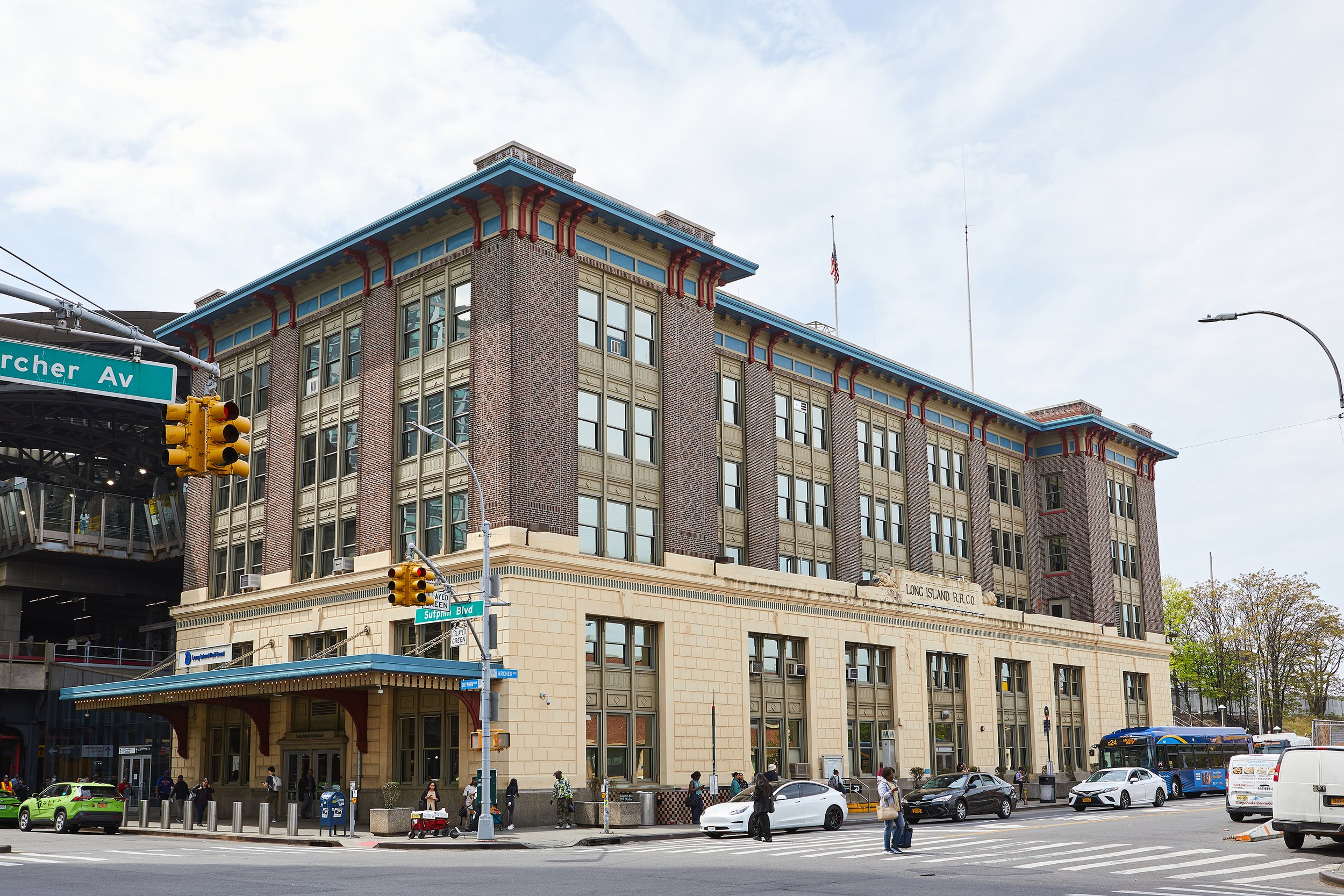
![A large brick and beige building with multiple windows, located on a busy city street corner with traffic lights, pedestrians, cars, and a bus.]()
Long Island Rail Road Jamaica Station
Archer Ave/Sutphin Blvd
Constructed in 1913, the station serves as the LIRR’s general offices. The station is face with stone on its lower two floors, painted white, with red brick above.
-
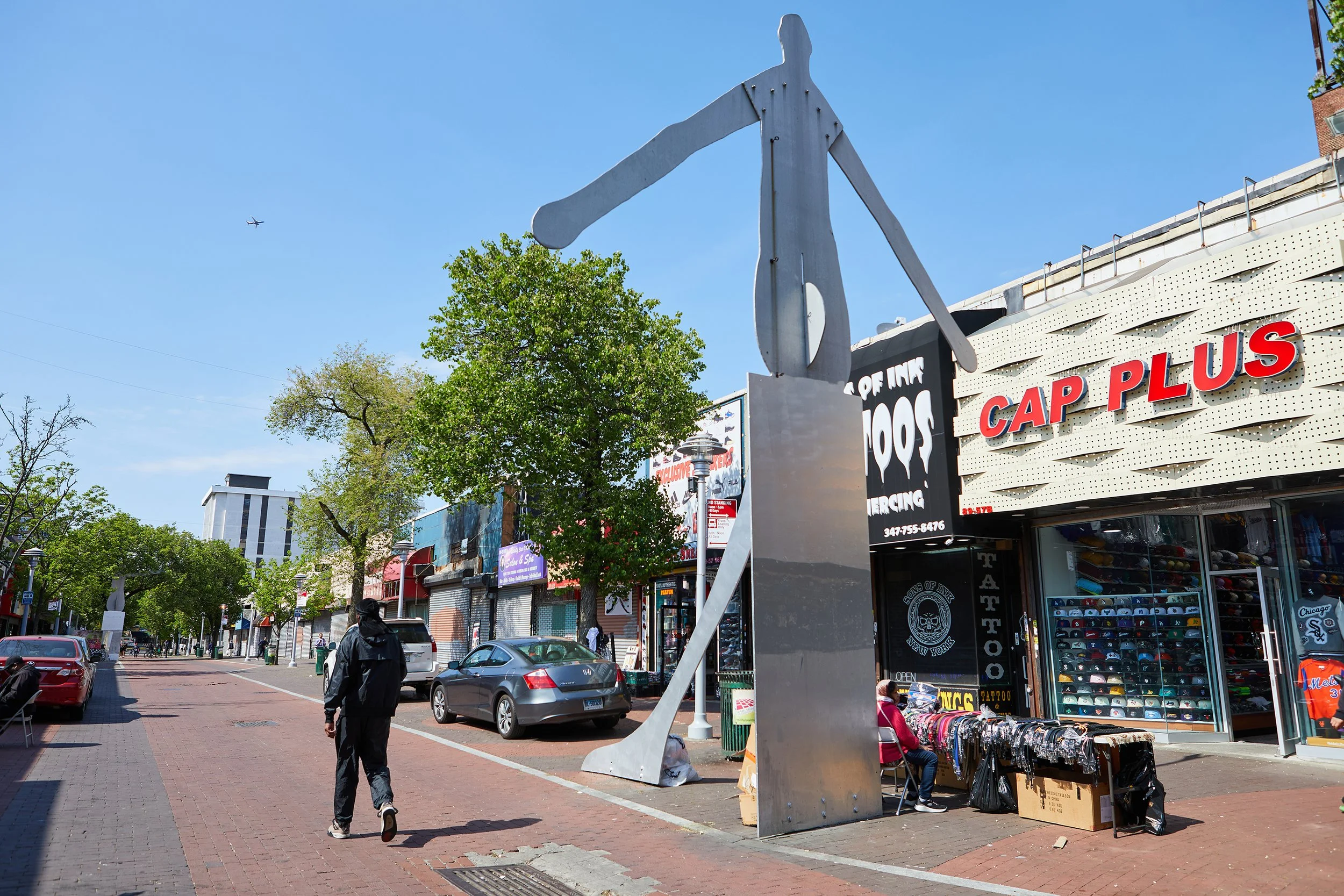
![Street scene with a large abstract metallic sculpture resembling a human figure with outstretched arm, storefronts including a tattoo shop, cars parked along the street, and trees lining the sidewalk.]()
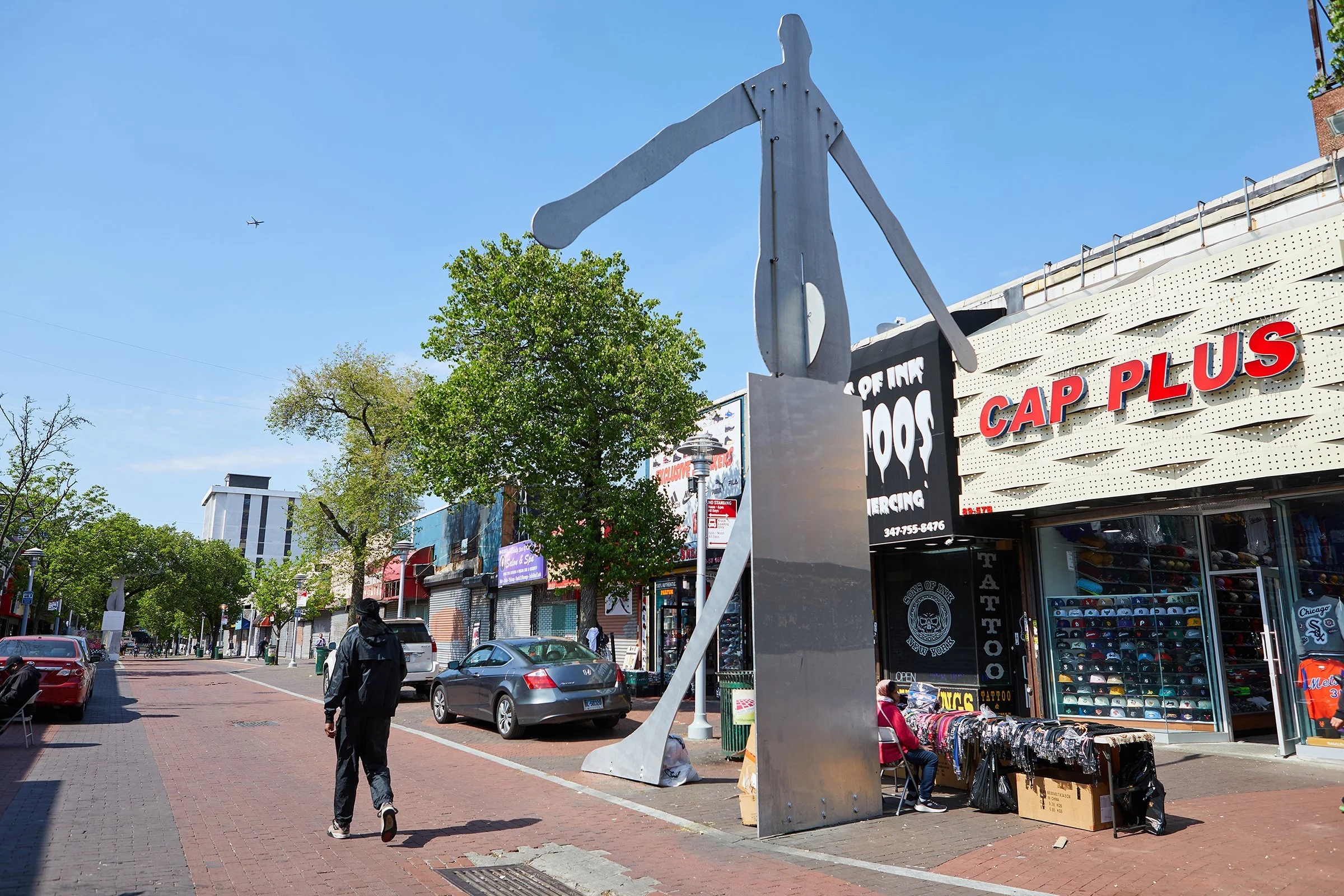
165th Street Mall
89-02 165th St
Take a look for Eponymous, three sculptures by William King on this long-time shopping street turned pedestrian mall. The former Macy’s department store is now an indoor site for vendors.
-
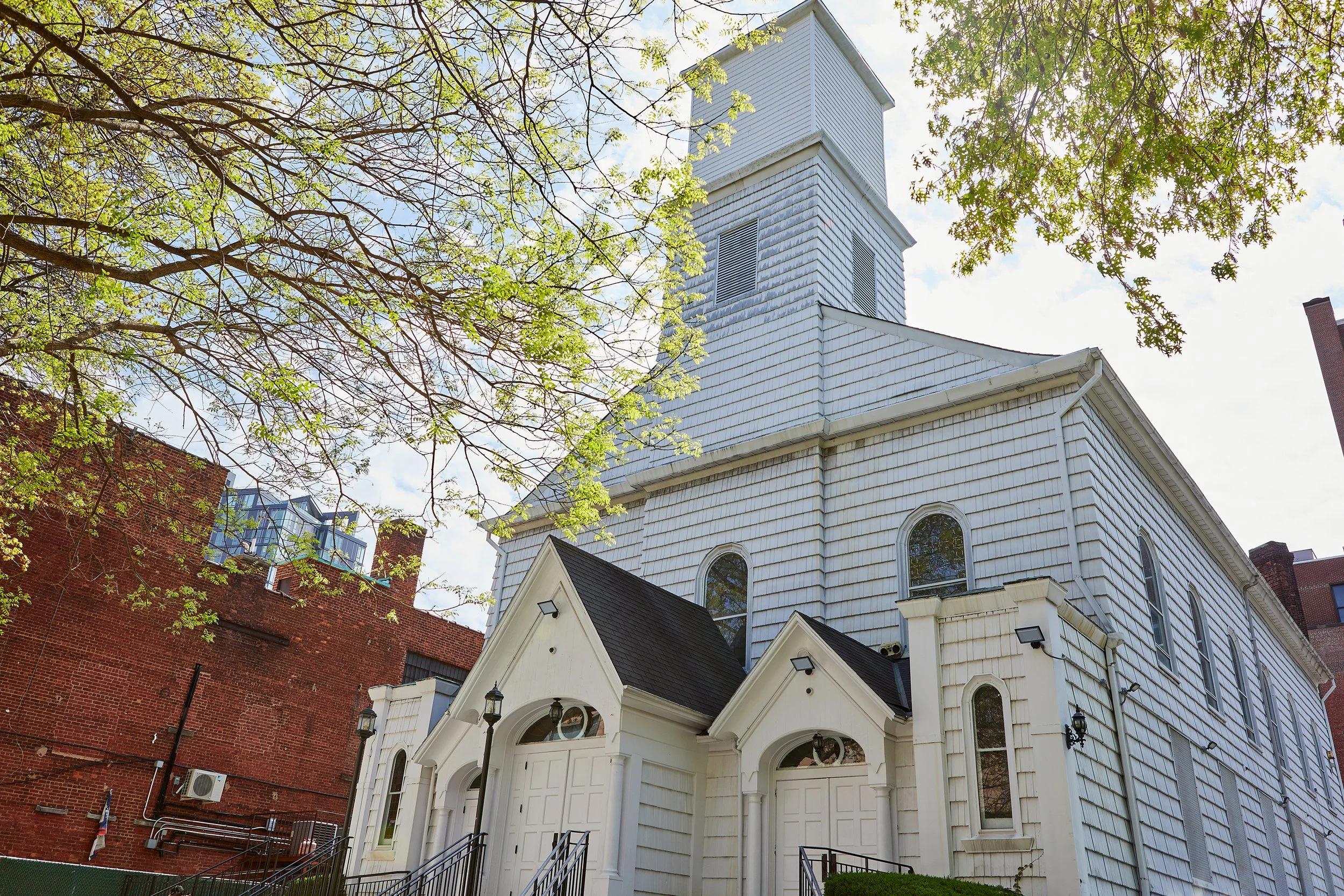
![A white church with a tall steeple, multiple arched windows, and a stone-paved entrance with steps, framed by leafy tree branches against a partly cloudy sky.]()
First Presbyterian Church
89-60 164th St
Two companies of Minutemen were led by members of this church. The 1813 sanctuary was moved from Jamaica Avenue around the corner to this site in 1920 on a trailer made of logs and pulled by mules.
-
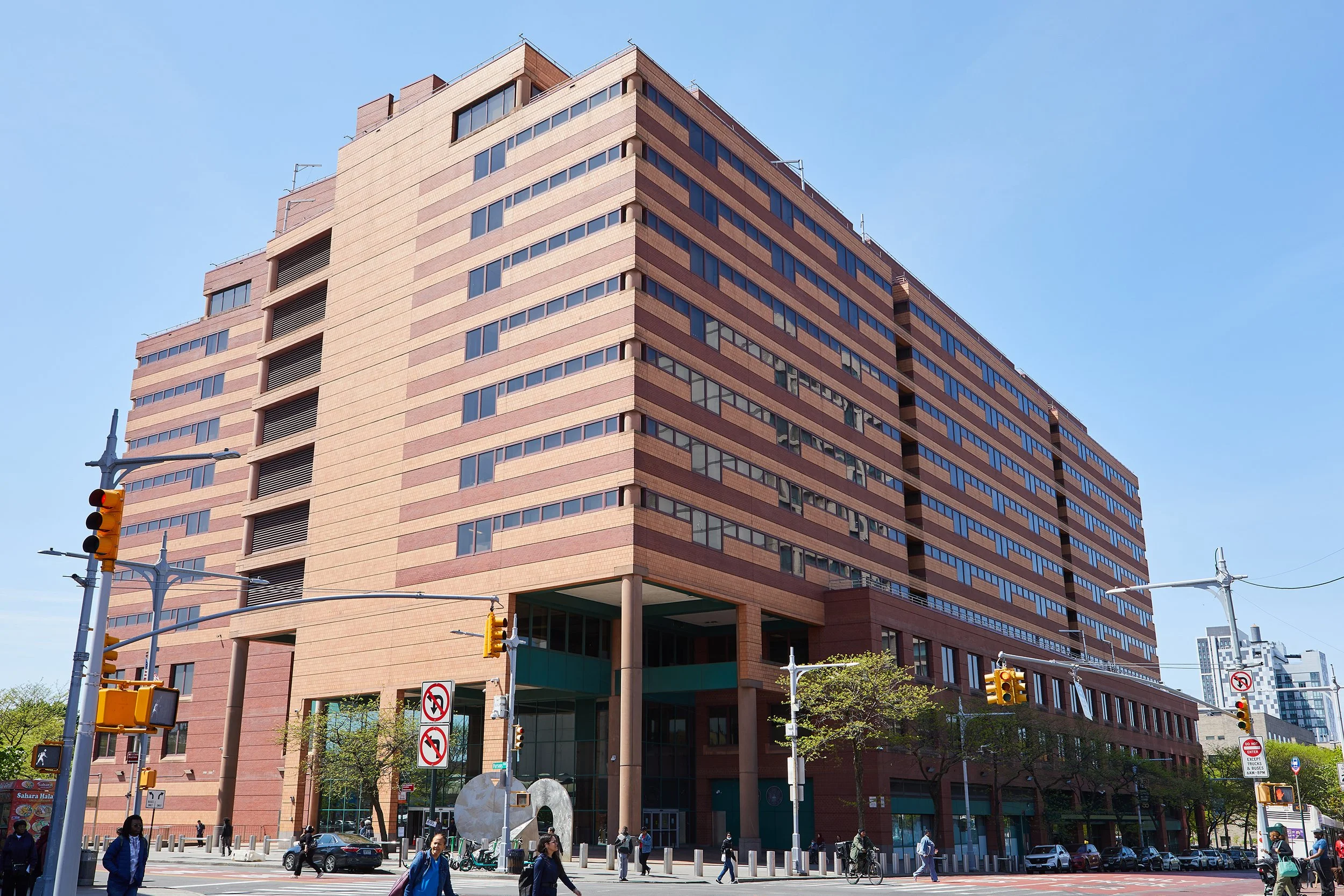
![A large multi-story building on a city street with traffic lights, crosswalk, pedestrians, and trees.]()
Joseph P. Addabbo U.S. Social Security Building
155-10 Jamaica Ave
The public building is the home of such paintings as Romare Bearden’s Family, Richard Yarde’s Savoy, Jacob Lawrence’s Community, and Mel Edward’s sculpture Confirmation.
Architectural Styles
Learn to spot NYC’s distinct architectural styles in DJQ.
-

Colonial/Federal
King Manor Museum
-

Gothic Revival
Grace Episcopal Church
-

Romanesque Revival
First Reformed Church
-

Free Classical
Former Jamaica Savings Bank
-

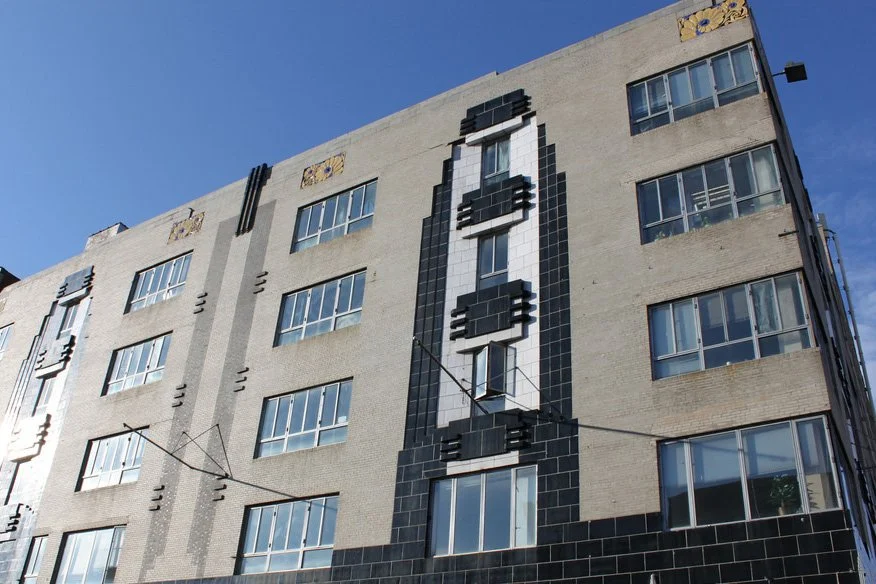
Art Deco
Title Guarantee